Why London Kids Need to Get Off Screens and Into the Outdoors
There's a moment every parent in London knows. The school run is done, homework is (sort of) finished, and before you've put the kettle on, a screen has appeared. A tablet. A phone. The TV. Sometimes all three.
It's not a parenting failure. It's just life in a city. But the numbers are starting to feel hard to ignore.
How Much Time Are Kids Really Spending on Screens?
UK children aged 5 to 16 are spending at least 6 hours a day on screens outside of schoolwork. Research published in 2025 put the average even higher, at 6 hours and 22 minutes daily - with children under five actually clocking the most screen time of any age group.
Meanwhile, the amount of time children spend outside has halved in a single generation. The average child is now outdoors for around 30 minutes, a few times a week.
In a city like London, that gap feels even wider. Gardens are smaller. Parks require a bit of planning. After-school clubs often happen indoors. And when you're managing work, commutes, and the general chaos of city life, it's easy for outdoor time to quietly slip down the priority list.
But what are kids actually missing when they're not outside? Quite a lot, it turns out.
What Happens When Kids Spend Time in Nature
1. Their Brains Work Better
Research consistently links outdoor, unstructured play with stronger executive function - the cluster of mental skills that includes focus, working memory, and the ability to switch between tasks. Children who spend regular time outside show improved attention spans and perform better academically, particularly in science and maths.
There's something about an unscripted environment - a park, a field, a woodland - that demands active thinking in a way a screen simply doesn't. Kids have to navigate, problem-solve, negotiate with each other, and adapt on the fly. That's cognitive development happening in real time.
2. They Become More Resilient
A major 2025 scoping review looked at 40 studies on outdoor and adventure play and found the same themes appearing again and again: greater resilience, stronger confidence, reduced anxiety, and better emotional regulation.
When children are allowed to take managed risks outdoors, climbing something, jumping something, exploring somewhere new… they learn how to handle fear, assess danger, and push past discomfort. These are skills that follow them into adulthood. They don't come from a screen.
3. Their Mental Health Improves
The 2025 research is clear that active outdoor play can help offset the negative mental health effects of excessive screen time. Children who spend time in natural environments show lower stress levels, better mood, and stronger emotional regulation.
For London children especially, who can go days without a real encounter with open space, greenery, or fresh air, this matters enormously. The city is brilliant, but it is also relentless. Nature provides something it simply can't.
4. They Get Physically Stronger
This one feels obvious, but the specifics are worth noting. Regular outdoor play builds cardiovascular fitness, coordination, strength, and motor skills. It's also linked to lower rates of obesity and perhaps surprisingly; a reduced risk of shortsightedness in children, which is increasingly associated with excessive close-up screen time.
Sunlight exposure supports Vitamin D production, which is essential for bone development and immune health. Something as simple as an afternoon in the park delivers benefits that no supplement can fully replicate.
5. They Learn How to Be Around People
Screens are largely solitary. Even multiplayer games tend to happen in isolation - headphones on, face forward, no eye contact, no reading the room.
Outdoor group play is the opposite. Children have to communicate, cooperate, manage conflict, take turns, and read social cues in real time. These are the foundations of emotional intelligence, and they're built in the park, on the sports field, at the camp, not in front of a device.
The London Problem
Most of the research around outdoor play was conducted in places where access to green space is relatively straightforward. London is a different picture.
For families in Chelsea, Battersea, Fulham, Chiswick or Barnes, there are parks… good ones. But getting to them requires effort, especially for working parents. Many children's after-school and holiday routines are built around structured indoor activities. Tutoring. Music. Screen time as a reward for a long day.
The result is that even in families that value outdoor time, it often just doesn't happen as much as everyone would like. The screen fills the gap because it's frictionless.
This is exactly why school holidays matter so much. They're the window, the genuine opportunity to reset the balance, to give children a concentrated run of days that are active, social, outdoor, and screen-free.
What Screen-Free, Outdoor Time Actually Looks Like in Practice
It doesn't have to mean wilderness survival or a camping trip to the Highlands (though if you can swing it, brilliant). It means:
Time in open space with other children and no structured agenda
Physical activity that's genuinely fun, not just "good for you"
The chance to take small risks, make decisions, and deal with the consequences
Social interaction that isn't mediated by a device
Adults who are engaged, encouraging, and know how to create the right environment
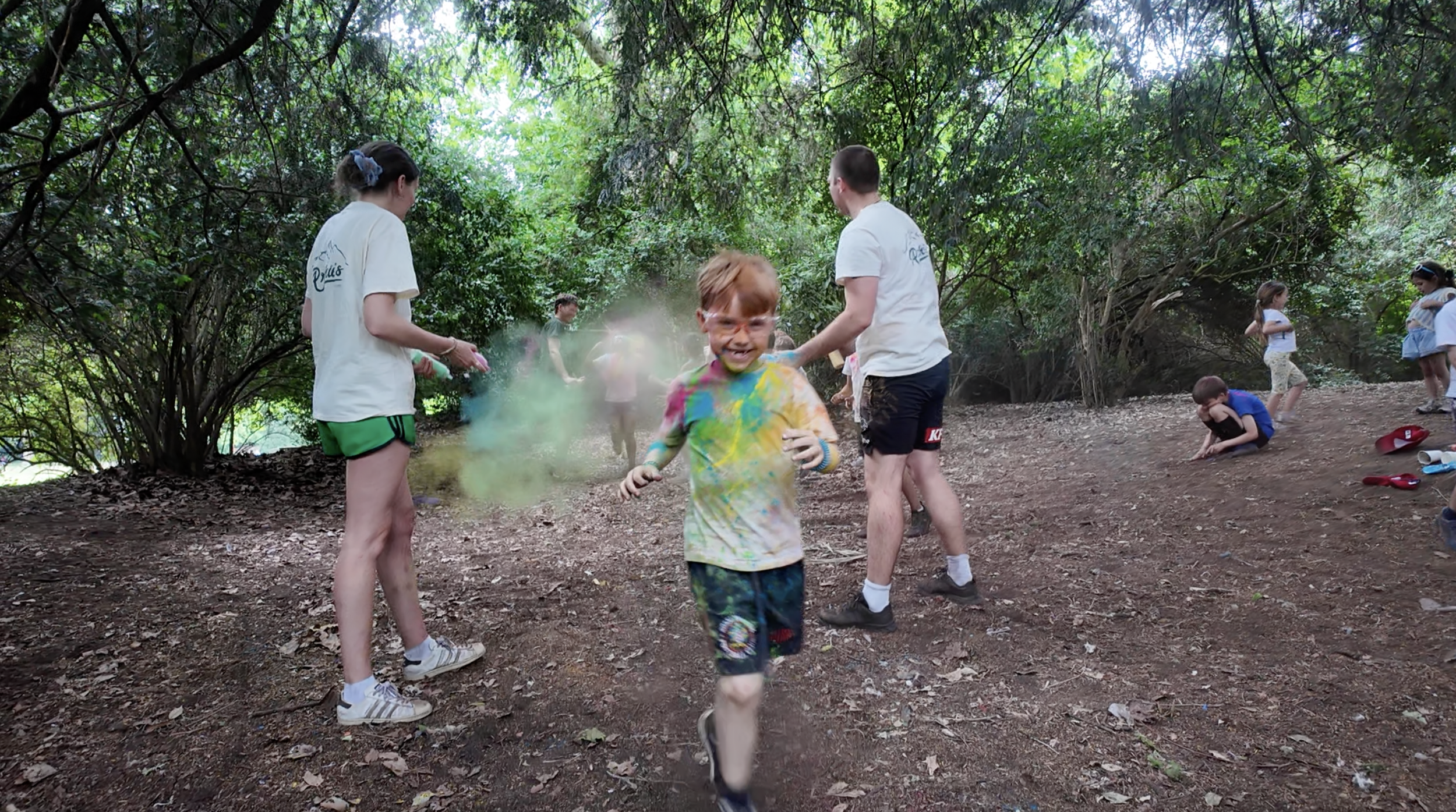
That's what a good holiday camp does. Not childcare dressed up in hi-vis. But a genuinely brilliant week that children are excited to go to, that wears them out in the best possible way, and that they're still talking about in September.
A Final Thought for London Parents
Nobody is saying screens are evil. They're part of life, and they're not going anywhere. But the research is pretty consistent: children who spend regular time outside, moving, playing, and engaging with the world around them, are healthier, happier, more resilient, and better equipped for everything that comes next.
The school holidays are the most reliable opportunity most London families have to tip the balance back. A week or two of active, screen-free, outdoor days can genuinely shift something, not just for that week, but in how children relate to boredom, to their bodies, and to each other.
It's worth protecting that time.
At Archie's, we run holiday camps at Battersea Park and across West London for children aged 4–12. Every day is active, outdoors, and entirely screen-free. Find out more about our summer camps